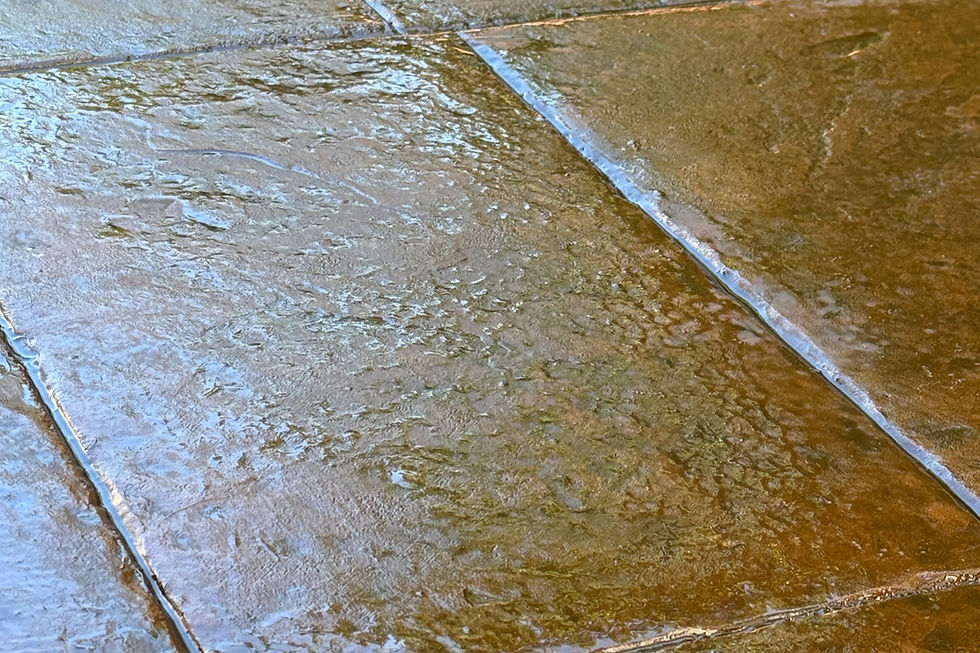
Should Stamped Concrete Be Shiny? High-Gloss vs. Low-Gloss Sealer
Stamped concrete does not need to be shiny to look finished or stay protected. In fact, for many exterior projects, a low-gloss sealer provides the color enhancement customers want while maintaining a more natural appearance and reducing future maintenance concerns.
That does not mean high-gloss stamped concrete is always the wrong choice. Some homeowners love the bold, wet-look finish. The important thing is understanding that gloss level is mainly an appearance decision, and not a measurement of how well the concrete is protected.
Before selecting a sealer, contractors and property owners should compare how each finish looks on day one, how it ages, and how much maintenance it may require over time.
What Makes Stamped Concrete Look Shiny?
The shine on stamped concrete typically comes from the sealer applied over the surface. Film-forming acrylic sealers can deepen the color of decorative concrete and leave behind anything from a subtle low sheen to a pronounced glossy finish.
The final appearance can be affected by several factors, including:
The sealer formulation and solids content
The number and thickness of coats
The porosity and texture of the concrete
The application method
The condition of any existing sealer
A glossy surface may make the color appear richer immediately after application, but more shine does not automatically mean more protection. A thick film can also make application marks, scratches, moisture problems, and uneven wear more noticeable.
High-Gloss vs. Low-Gloss Concrete Sealer
Both finishes can enhance stamped concrete, but they create very different looks and ownership experiences.
Factor | High-Gloss Sealer | Low-Gloss Sealer |
|---|---|---|
Appearance | Bold, reflective, wet look | Natural, subtle, low-sheen finish |
Color Enhancement | Strong and dramatic | Rich color without excessive shine |
Visible Wear | Scratches, dull areas, and traffic patterns may stand out | Normal wear is often less noticeable |
Application Sensitivity | Heavy or uneven areas can be highly visible | More forgiving appearance when applied correctly |
Maintenance Expectations | May require more attention to preserve an even gloss | Often easier to maintain as the surface ages |
Best Fit | Customers who specifically want a glossy decorative finish | Patios, pool decks, walkways, and natural-looking stamped concrete |
The Benefits of High-Gloss Stamped Concrete
High-gloss sealer can produce a dramatic transformation. It deepens the color, emphasizes antiquing, and creates the wet-look finish many customers associate with freshly sealed concrete.
A high-gloss finish may be a good fit when:
The customer specifically wants a bold, reflective surface
The area is decorative and receives limited wear
The owner understands the ongoing maintenance expectations
The contractor has confirmed the sealer is compatible with the surface and any existing coating
The initial appearance can be impressive, but the decision should not be based on the first day alone. Exterior concrete is exposed to sunlight, moisture, freeze-thaw cycles, deicing salts, foot traffic, furniture, and routine cleaning. As a glossy film wears, the difference between high-traffic and protected areas may become increasingly visible.
Why High Gloss Can Create More Maintenance
The issue is not simply that shiny concrete looks bad. The issue is that a highly reflective finish can make imperfections and changes easier to see.
Common concerns include:
Uneven wear: Traffic lanes and exposed sections may lose their gloss before protected areas.
Visible scratches and scuffs: Marks often stand out more against a reflective finish.
UV exposure: Exterior film-forming sealers gradually weather in sunlight, making changes in gloss more apparent.
Overapplication problems: Thick or puddled sealer can trap solvent or moisture and contribute to bubbling, hazing, or milky white areas.
Higher expectations: Once customers become accustomed to a freshly sealed wet look, even normal weathering can appear like a failure.
That can mean more frequent maintenance and a greater chance of callbacks, especially when the customer was not told how the finish would age.
Why Low-Gloss Sealer Is Often the Better Long-Term Choice
A low-gloss or low-sheen sealer can still enhance the color and contrast of stamped concrete without making the surface look overly coated. The result is closer to natural stone and often fits patios, walkways, pool decks, and outdoor living spaces more comfortably.
Low-gloss stamped concrete offers several practical advantages:
A more natural-looking finish
Less obvious scratches and traffic wear
Reduced visual contrast as the sealer ages
Lower risk of an artificial or plastic-looking surface
Easier long-term maintenance expectations for the customer
For contractors, that can also mean fewer appearance-related callbacks. The surface remains protected and color-enhanced, but the customer is less likely to judge performance only by whether it still looks freshly wet.
Does Low-Gloss Sealer Still Enhance the Color?
Yes. Low gloss does not mean dull, colorless, or unsealed. D-One All-In-One Sealer is formulated to enhance color while leaving a clear, low-sheen finish. It combines an acrylic and penetrating sealer in one formula, giving stamped concrete a rich, natural appearance without excessive shine.
D-One is also designed to help protect concrete from water intrusion, deicing salts, saltwater pool systems, and stains caused by water runoff, leaves, rust, and oil. Its low-sheen appearance makes it a strong option for contractors who want color enhancement with fewer of the maintenance concerns associated with a heavy glossy film.
How to Choose the Best Sealer for Stamped Concrete
There is no single gloss level that is right for every project. Ask these questions before choosing a stamped concrete sealer:
1. What does the customer expect the finished surface to look like?
Do not assume that “sealed” means shiny. Show the customer physical samples or complete a test area whenever possible. Words such as matte, satin, low sheen, gloss, and wet look can mean different things to different people.
2. Where is the concrete located?
An exposed driveway or pool deck experiences different conditions than a covered patio. Consider sunlight, moisture, deicing salt, pool chemicals, traffic, furniture, and surrounding landscaping.
3. How much maintenance is the owner willing to accept?
A customer who wants a consistent showroom-like gloss should understand that the finish may require more frequent attention. A customer who values a natural appearance and easier upkeep may be happier with low gloss.
4. Is there already a sealer on the concrete?
New sealer must be compatible with the existing product and surface condition. Applying an incompatible sealer - or placing additional material over a failing coating - can lead to adhesion and appearance problems. Identify the existing sealer and prepare the surface correctly before resealing.
5. Does the area need added traction?
Gloss level alone does not determine slip resistance. Any film-forming sealer can affect traction, especially on wet exterior concrete. Evaluate the texture, slope, exposure to water, and intended use of the area. When appropriate, use a compatible slip-resistant additive according to the manufacturer’s instructions.
Tips for Applying a Low-Gloss Sealer
Even the right sealer can fail if the surface is not properly prepared or the material is applied too heavily. Always follow the current technical data sheet for the specific product.
For a consistent finish:
Start with clean, dry concrete. Remove dirt, oil, residue, loose coating, and other contaminants before sealing.
Check the weather. Temperature, direct sun, wind, moisture, and rain forecasts can all affect application and film formation.
Test before full application. Use a small, inconspicuous area on the same concrete to confirm color enhancement, gloss level, and compatibility.
Apply at the recommended coverage rate. More sealer is not automatically better. Avoid thick areas and puddles.
Backroll for uniformity when directed. This helps distribute the material and prevents heavy spots.
Allow proper drying and recoat time. Do not rush a second coat or return the surface to traffic before the sealer is ready.
For D-One, technical guidance calls for a clean, dry surface, a substrate temperature between 50°F and 80°F, and an approximate coverage rate of 250-350 square feet per gallon. It is applied with a solvent-resistant pump-up sprayer and immediately backrolled to maintain uniform coverage and avoid overapplication. Review the full technical data sheet before use.
Should Stamped Concrete Be Shiny?
High gloss may be the right choice for a customer who wants a dramatic wet look and accepts the maintenance that comes with it. For many exterior stamped concrete projects, however, a low-gloss sealer provides the better balance of color enhancement, natural appearance, protection, and long-term serviceability.
The best finish is not simply the one that looks brightest immediately after application. It is the one that fits the project, performs in the jobsite conditions, and continues to meet the customer’s expectations as it ages.
Frequently Asked Questions
Is high-gloss sealer better for stamped concrete?
Not necessarily. High gloss creates a more reflective wet look, but it does not automatically provide better protection. Product chemistry, surface preparation, application, and compatibility matter more than shine alone.
Does stamped concrete need to be sealed?
A compatible decorative concrete sealer can enhance color and help protect stamped concrete from moisture, stains, salt damage, and weathering. The correct product and application schedule depend on the concrete, environment, and existing sealer.
Can low-gloss sealer make stamped concrete look darker?
Yes. A color-enhancing low-gloss sealer can deepen the color and bring out antiquing while maintaining a natural, low-sheen appearance.
Is shiny stamped concrete more slippery?
Shine by itself is not a reliable measurement of traction. Surface texture, sealer film build, water, slope, and the use of a compatible slip-resistant additive all affect how the surface performs.
How often should stamped concrete be resealed?
There is no universal schedule. Exposure, traffic, climate, product type, surface preparation, and previous application thickness all affect service life. Inspect the concrete for fading color, uneven wear, moisture absorption, or loss of protection, and follow the sealer manufacturer’s recommendations.
Find the Right Sealer for Your Project
Explore decorative concrete sealers from DecoCrete, or contact our team for information about selecting the right product for your stamped concrete application, or upcoming decorative concrete training classes for hands-on techniques, product guidance, and jobsite-tested application tips.