Best Ways to Diagnose and Fix Failed Stamped Concrete Sealer
Updated: Sep 3
Stamped concrete sealer should enhance the color, protect the surface, and make the texture stand out. But when sealer starts turning white or cloudy, peeling, wearing unevenly, or building up in low areas, adding another coat usually isn't the answer.
In many cases, the problem isn't the stamped concrete itself. It's the layers of sealer sitting on top of it.
The right repair depends on why the sealer failed, how severe the problem is, and what type of sealer is already on the concrete. Some minor solvent-based acrylic sealer problems can be rejuvenated without completely removing the coating. Other jobs have reached the point where the failed sealer needs to come off so you can get back to a clean surface and start fresh. Below, we'll break down the most common stamped concrete sealer problems, what causes them, and how severely failed sealer can be restored.
Quick Diagnosis: Common Stamped Concrete Sealer Problems
If your stamped concrete sealer looks white, cloudy, peeling, bubbling, or sticky, the appearance can often give you a good indication of what went wrong. Before applying more sealer or attempting a repair, identify the likely cause and determine what type of sealer is already on the surface.
Sealer problems can have similar appearances but require very different repair methods. Always test any repair method in a small, inconspicuous area first, especially if you do not know what type of sealer was previously applied.
Why Does Stamped Concrete Sealer Turn White or Cloudy?
A white, milky, cloudy, or hazy appearance is one of the most common complaints with sealed decorative concrete. There isn't one single cause, and it can be from a variety of different things.
Too Much Sealer

One of the biggest problems we see is simply too much sealer on the concrete. Stamped concrete has low areas, grout lines, joints, and deep texture where liquid sealer can collect. If too much material is applied, or if heavy maintenance coats continue to be added over the years, the coating can become excessively thick. Instead of having a thin, breathable film, you end up with layers of acrylic sitting on top of the concrete.
White or cloudy areas
Uneven gloss
Soft or tacky spots
Peeling or delamination
Bubbles
Areas that wear differently than the rest of the slab
More sealer does not necessarily mean more protection.
Moisture Trapped Beneath the Sealer
Moisture is another major cause of white or cloudy concrete sealer. Concrete naturally contains and transmits moisture. If a film-forming sealer is applied while the surface is still damp, or if excessive sealer buildup reduces the coating's ability to breathe, moisture can become trapped underneath or within the sealer film.
Instead of remaining clear, the coating can take on a cloudy or milky appearance. This is why surface dryness, weather conditions, dew point, and proper application rates matter when sealing exterior decorative concrete.
Poor Surface Preparation
Even the best concrete sealer will struggle to bond to a poorly prepared surface. Dirt, dust, old coatings, contaminants, moisture, and excessive antiquing material can interfere with adhesion between the sealer and concrete. Eventually, the coating may begin to:
Flake
Peel
Turn cloudy
Wear unevenly
Separate from the surface
Good sealer performance starts before the sealer ever comes out of the bucket.
Years of Resealing
Stamped concrete may need to be resealed throughout its life, but there is a difference between maintaining a coating and continually building more coating. If another full coat is applied every time the concrete begins looking dull, you can eventually create a thick layer of acrylic on top.
The look of the surface may improve after each application, but continued buildup will eventually make future sealer problems more likely. Before resealing stamped concrete, you should always evaluate what's already there.
White Sealer or Efflorescence?
Not every white or cloudy area on stamped concrete is caused by failed sealer. One of the first steps in diagnosing the problem is determining whether the discoloration is actually within the sealer or whether it is efflorescence coming from the concrete itself.
Efflorescence is a white, powdery or crystalline deposit that forms when moisture moves through concrete and carries soluble salts to the surface. As the moisture evaporates, the salts remain behind.
Sealer whitening or blushing occurs when moisture, excessive coating thickness, or poor adhesion causes an acrylic sealer to develop a cloudy, milky, or white appearance.
How to Tell the Difference
Efflorescence typically looks dry, chalky, or powdery and may appear on areas that are not sealed. In many cases, some of the residue can be rubbed or brushed from the surface. Failed or blushed sealer usually looks like the whiteness is trapped within or beneath the coating. The surface may still appear glossy, and the white areas may become more noticeable after rain or periods of high moisture.
Efflorescence | White or Blushed Sealer |
|---|---|
Usually powdery or crystalline | Usually cloudy, milky, or hazy |
Caused by salts carried through the concrete by moisture | Caused by moisture, excessive sealer buildup, or coating failure |
May brush or rub from the surface | Typically appears trapped within or beneath the coating |
Can occur on sealed or unsealed concrete | Occurs within an existing sealer or coating |
Requires addressing moisture and removing salt deposits | May require solvent reactivation, rejuvenation, or sealer removal |
Correctly identifying the problem is important because the repair methods are different. Applying additional sealer over efflorescence can trap the deposits beneath the coating, while treating true sealer failure as efflorescence will not correct the underlying problem.
Common Stamped Concrete Sealer Problems
White or cloudy sealer is one of the most common issues with decorative concrete, but it is not the only type of sealer failure. Peeling, bubbling, and tackiness can also indicate problems with application, surface preparation, moisture, or compatibility.
What You See | Possible Cause | Typical Next Step |
|---|---|---|
White or milky sealer | Trapped moisture or excessive coating thickness | Determine severity before adding more sealer |
Uneven glossy and dull areas | Uneven application or wear | Clean and evaluate existing coating |
Peeling or flaking | Poor adhesion or coating failure | Failed material may need to be removed |
Thick buildup in texture | Repeated or heavy applications | Rejuvenation or removal may be necessary |
Sealer turns white after getting wet | Moisture interacting with the coating | Allow to dry and evaluate coating condition |
Dull, faded stamped concrete | Normal weathering or aging | May only require proper cleaning and maintenance |
Loss of antiquing/color contrast | Wear, cleaning, or restoration work | Re-antique before final sealing if needed |
Peeling or Flaking Concrete Sealer
Concrete sealer that begins peeling, flaking, or separating from the surface has usually lost its bond with the concrete or with a previous coating.
Common causes include:
Moisture trapped beneath the sealer
Dirt, dust, or contamination left on the concrete before sealing
Applying new sealer over an incompatible existing coating
Applying too much sealer
Repeated maintenance coats that have created excessive buildup
Applying sealer before the concrete was sufficiently dry
Deterioration of an older coating
Once a sealer has begun actively peeling, simply applying another coat over the top usually will not solve the problem. Loose or poorly bonded material should be removed before resealing.
The amount of removal required depends on the condition of the existing coating. Small isolated areas may sometimes be repaired, while widespread peeling or delamination may require stripping the sealer from the entire surface and starting over.
Bubbling or Blistering Concrete Sealer
Bubbles or blisters can form when air, moisture, or solvent becomes trapped within a sealer film before the coating has properly cured. This is especially common with film-forming acrylic sealers when they are applied too heavily or during hot conditions.
Common causes include:
Applying sealer to hot concrete
Sealing in direct sunlight
Applying coats too heavily
Applying additional coats before the previous coat has flashed or cured properly
Moisture escaping from the concrete
Solvent becoming trapped beneath a thick sealer film
Small bubbles may sometimes settle as the coating cures, but severe blistering usually indicates that the sealer film is too thick or has lost proper adhesion. Depending on the type of acrylic sealer and the severity of the problem, a compatible solvent treatment may sometimes help reflow the coating. More severe failures may require partial or complete removal of the existing sealer. Always confirm the type of sealer before attempting to reactivate it with a solvent.
Sticky or Tacky Concrete Sealer
Concrete sealer that remains sticky or tacky long after application usually indicates that the coating has not cured properly.
Common causes include:
Applying too much sealer
Applying multiple coats too quickly
Cool or humid weather slowing solvent evaporation
Poor ventilation
Applying incompatible sealers over one another
Contamination on the concrete surface
Excessive buildup from repeated resealing
One of the worst things you can do to a tacky surface is immediately apply another coat of sealer. Adding more material often makes the buildup worse and can extend the curing problem. Allow the surface adequate time to dry and determine what type of sealer is present before attempting a repair.
With compatible solvent-based acrylic sealers, controlled solvent treatment may sometimes help soften and redistribute excess material. If the coating remains soft, sticky, or poorly bonded, removing the failed sealer may be the better long-term solution.
Before Attempting Any Sealer Repair
The correct repair method depends heavily on the type of sealer already on the concrete. A treatment that may work with a solvent-based acrylic sealer may not be appropriate for a water-based acrylic, penetrating sealer, urethane, or other coating. If the original product is unknown, test any repair method in a small, inconspicuous area before treating the entire project.
Different symptoms can point toward different problems. The important part is diagnosing the problem before choosing the repair. Putting another coat of sealer over a failing coating can temporarily make the concrete look darker or shinier, but it doesn't necessarily solve what's happening underneath.
Do You Have to Strip Failed Concrete Sealer?
Not always. Some solvent-based acrylic sealer problems can be corrected by reactivating the existing coating rather than completely stripping it. This can be useful when the acrylic coating is excessively built up, faded, beginning to deteriorate, or showing certain adhesion problems but is still recoverable. DecoCrete Rejuvenator is designed specifically for restoring existing solvent-based acrylic sealer without adding another layer of acrylic.
If the surface doesn't need another layer of resin, adding another coat may not be the best maintenance method. If the coating is severely delaminated, heavily built up, peeling throughout the project, or has failed to the point where you no longer have a dependable surface to bond to, then stripping the sealer may be the better long-term solution.
When Should Failed Sealer Be Removed?
When stamped concrete has substantial sealer buildup, widespread whitening, uneven wear, peeling, or poor adhesion, the coating may have reached the point where maintenance alone is no longer enough. In these situations, continuing to apply products over the existing coating can compound the problems. Removing the failed sealer and returning to a properly prepared surface is often the better long-term approach.
There are several methods for stripping sealer from concrete, including chemical strippers and mechanical methods, such as sandblasting. For heavily failed sealer, light sandblasting can be an effective method for removal; however, this method should only be done by trained professionals.
Chemical Stripping vs. Sandblasting Concrete Sealer
Chemical sealer strippers can soften or break down many concrete coatings so they can be removed from the surface. They work, but anyone who has stripped a heavily sealed stamped concrete patio knows how messy the process can become. Once the old coating softens, it will need to be removed from the slab. The resulting residue can be sticky and difficult to contain, especially on an exterior project surrounded by delicate landscaping.
Why Sandblasting Can Work Well
Portable sandblasting equipment can be used to lightly remove failed sealer from stamped concrete while opening the surface for the next steps in the restoration process. The goal is not to aggressively blast into the concrete or expose large aggregate. The goal is to remove the failed coating and lightly open the surface. When done correctly, this can provide several advantages:
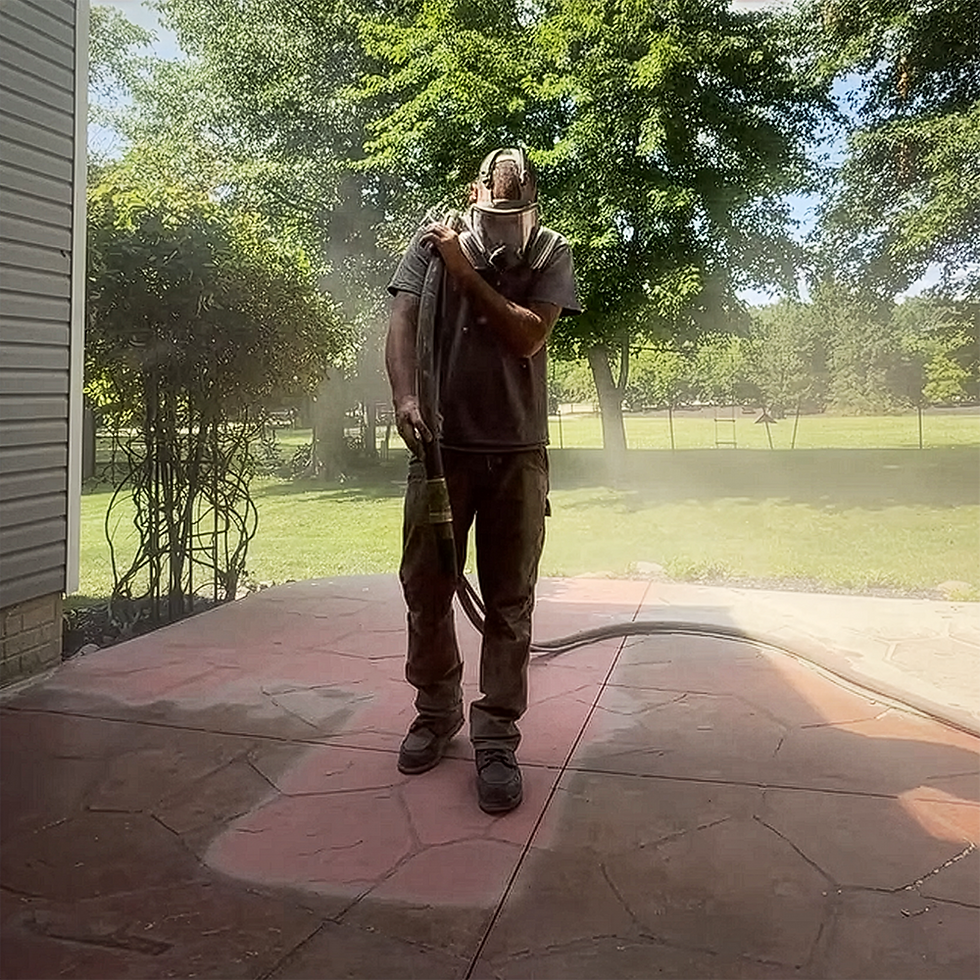
Remove years of failed sealer buildup
Create a clean surface to work with
Open the surface for better adhesion
Eliminate weak coating layers beneath the new sealer
Reset the stamped concrete finish
This type of work needs to be controlled, and overly aggressive blasting can change the appearance and texture of decorative concrete, so the operator needs to understand what is trying to be accomplished.
Why Surface Preparation Matters
One reason restoration jobs can perform extremely well after the old coating is removed is the quality of the surface you're sealing. Instead of applying another layer over aging sealer, you're bonding to properly prepared concrete. Another major difference is that the concrete you're working on is now also fully cured.
On new stamped concrete, sealing is part of the early stages of the slab's life. The concrete continues going through hydration and moisture changes as it cures. Years later, when older stamped concrete surfaces are properly stripped and prepared, you'll be working with fully cured concrete. Combine that with a clean, open surface, and you have a strong foundation for the next sealer application.
What Happens to the Antiquing When You Strip Stamped Concrete?
Removing the sealer can also change the appearance of the stamped concrete underneath it. Stamped concrete often gets much of its depth and realism from the darker accent color sitting in:
Grout lines
Low areas
Texture
Joints
Natural-looking depressions in the stamp pattern
Sandblasting or aggressive stripping may remove some of that original antiquing. That's not necessarily a problem; it just means re-antiquing needs to be part of the restoration process. After the surface has been stripped, cleaned, and properly prepared, an antiquing product can be used to put contrast back into the texture.

For restoration work, DecoCrete Texture Enhancer gives you control over where and how much secondary color is added. The pigment settles into the low areas of the stamped texture, helping bring back the dimension that may have been lost during the stripping process. Don't skip this step and wonder why newly sealed concrete looks flat.
Choosing a Sealer After Removing Failed Sealer

Once the failed coating has been removed and the color has been restored, it's time to reseal. For stamped concrete restoration and resealing, D-One All-In-One Sealer is an option designed to enhance color without creating an excessively heavy, high-build appearance. D-One works well for stamped concrete restoration because it enhances the color without creating the type of heavy, high-build appearance that can contribute to excessive coating buildup. It combines acrylic protection with penetrating characteristics and leaves a lower-sheen, natural-looking finish. But the product is only part of the equation. No matter which decorative concrete sealer you're using:
Follow the manufacturer's coverage rate.
Don't assume that putting down extra material will make the concrete look better or make the sealer last longer.
Properly applied sealer beats overly applied sealer every time.
How to Fix Severely Failed Stamped Concrete Sealer
When stamped concrete sealer has failed badly enough to require removal, the restoration process generally looks like this:
Inspect the Existing Coating. Determine what type of sealer is on the surface and how badly it has failed. Look for white or cloudy areas, peeling, delamination, thick coating buildup, uneven wear, soft spots, and areas where the sealer has completely worn away. This helps determine whether the coating can be maintained, rejuvenated, or needs to be removed.
Remove the Failed Sealer. If the coating has failed beyond repair, remove it using the appropriate stripping method. If light sandblasting is used, the goal is to remove the failed coating without unnecessarily cutting into or changing the stamped concrete texture.
Thoroughly Clean the Surface. Once stripping is complete, remove all blasting media, coating residue, dust, dirt, and contaminants. A coating is only as good as the surface underneath it.
Let the Concrete Dry. Don't rush from cleaning into sealing. Concrete that looks dry on top can still contain moisture. Give the surface adequate time to dry and make sure conditions are appropriate for the sealer you're using.
Restore the Antiquing. If stripping removed the secondary color, re-antique the stamped surface. Pay particular attention to grout lines, depressions, joints, and texture where natural-looking contrast should appear.
Apply the New Sealer. Once the surface is properly prepared and dry, apply the selected sealer according to the manufacturer's instructions. Avoid the temptation to make the first application excessively heavy just because you're starting with bare concrete.
Can You Put New Sealer Over Old Sealer?
Yes, but only when the existing coating is in suitable condition and compatible with the new product. This is where many stamped concrete maintenance problems begin. Before applying new sealer over old sealer, you should always ask:
Is the existing sealer still bonded?
Is it peeling?
Are there white or cloudy areas?
Is there already significant buildup?
Do I know whether the old and new sealers are compatible?
Is the surface clean and completely dry?
If the coating underneath is failing, the new coating is still sitting on a bad foundation. Sometimes the best way to fix sealer is to stop adding more sealer.
How to Prevent Stamped Concrete Sealer Problems
A major sealer restoration can often be avoided with proper application and maintenance.
Apply Sealer at the Correct Coverage Rate
Don't flood the surface. Deeply textured stamped concrete makes it particularly easy for excess material to collect in low areas.
Don't Automatically Add Another Heavy Coat
Evaluate the existing sealer first. A surface that looks dull doesn't always need another heavy layer of acrylic.
Make Sure the Concrete Is Dry
Moisture and film-forming coatings don't make a good combination. Give washed concrete adequate drying time and pay attention to temperature, humidity, rain, and changing weather conditions.
Keep the Surface Clean
Dirt and contamination interfere with adhesion. Cleaning isn't just about appearance. It's part of preparing the surface for the next coating.
Use the Right Sealer for the Application
Gloss level, solids content, breathability, exposure conditions, previous coatings, and the desired appearance should all factor into the sealer you choose. Not every concrete sealer is the right sealer for every project.
How Often Should Stamped Concrete Be Resealed?
There isn't one schedule that applies to every stamped concrete project. Traffic, weather, UV exposure, freeze-thaw cycles, deicing salts, pool chemicals, the original sealer, and how much product was applied can all change the maintenance cycle.
Instead of resealing simply because a certain number of years have passed, inspect the concrete. A surface that still has a healthy coating may not need another full application.
The goal is to maintain the sealer without allowing unnecessary layers to continually build up.
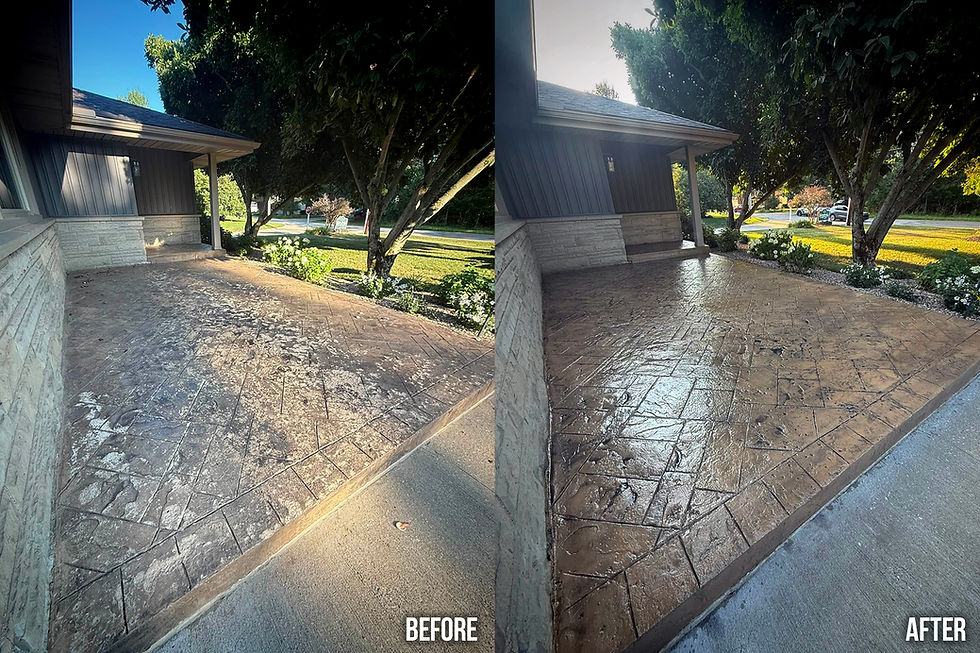
Before and After Resealing
Can Pressure Washing Remove Concrete Sealer?
Pressure washing can remove dirt, loose material, and some severely deteriorated coating, but it generally shouldn't be treated as a dependable way to completely strip a sound acrylic sealer. Trying to compensate with extremely aggressive pressure can also damage the concrete surface. If the coating truly needs to be removed, use a stripping method appropriate for the existing sealer and decorative finish.
Can Xylene Fix White or Cloudy Concrete Sealer?

This is another common question, and the answer is: sometimes, but it depends on the sealer and the problem. Certain solvent-based acrylic coatings can sometimes be reactivated or redistributed with an appropriate solvent or rejuvenating treatment.
That does not mean solvent will fix every white sealer problem. If the coating has poor adhesion, severe buildup, widespread delamination, contamination underneath it, or another type of failure, reactivating the surface may not solve the underlying issue. Always identify the existing coating and follow the sealer manufacturer's recommendations before attempting a solvent treatment.
What Is the Best Way to Fix Failed Stamped Concrete Sealer?
There isn't one repair that applies to every stamped concrete patio. The first step is diagnosing the condition of the existing coating. A mildly deteriorated solvent-based acrylic may be a candidate for rejuvenation. A sound but weathered coating may simply need proper maintenance. A heavily built-up, peeling, cloudy, or poorly bonded coating may need to be removed.
For severely failed coatings, light sandblasting followed by re-antiquing and proper resealing can provide a clean way to start over when simpler maintenance methods are no longer appropriate. When the process is completed correctly, the visual improvement can be dramatic. Removing the failed coating, restoring the antiquing, and applying fresh sealer can bring back much of the color, contrast, and depth that made the stamped concrete attractive in the first place. More importantly, the repair addresses the failed coating instead of hiding it beneath another layer of sealer.
The goal is to correct the problem at the surface and rebuild the finish on a sound, properly prepared foundation. If you're a contractor dealing with a stamped concrete sealer problem and aren't sure whether the surface should be rejuvenated, stripped, or resealed, contact our team of experts, and we will be happy to help.
